
Off-Piste Skiing in Verbier — The Best Lines
what the standard guides miss
Verbier's reputation for unparalleled off-piste skiing is well deserved. The combination of lappable north-facing couloirs, vast open bowls, accessible backcountry and reliable snow makes it one of the great freeride destinations in the world. Here, from the windows and terraces of Chalet la Vigne in Patier, you can see a fair bit of the terrain described below. These are runs we know well, some fairly secret, and some not obvious. All of these require knowledge of mountain safety, with a guide being ideal, and avalanche gear is essential. To see videos of these lines and many more, check out our YouTube channel.
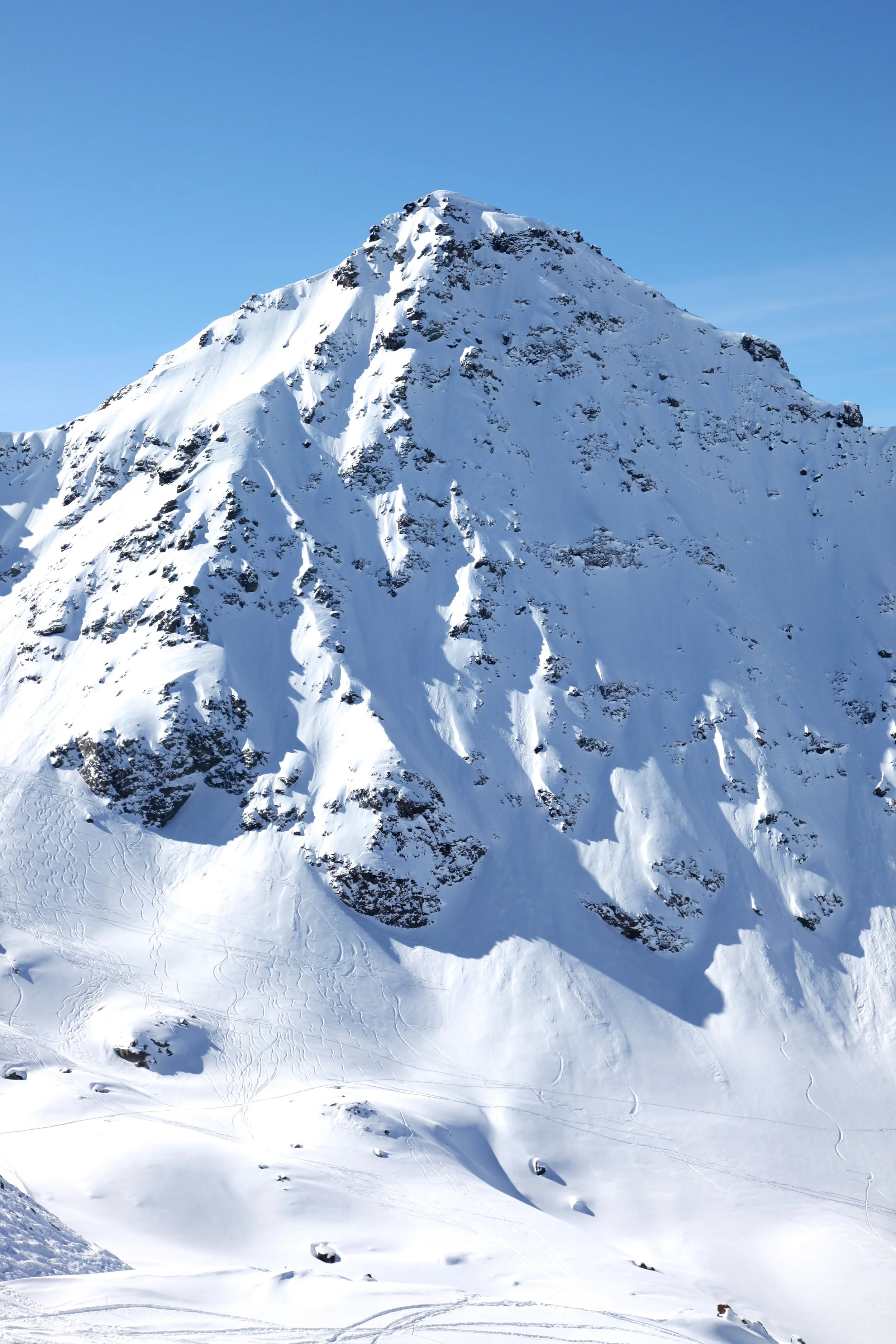
The Bec des Rosses on a powder day - the Dogleg Couloir is to the looker’s left of the middle, sunny at first then shady
The Highway
The Highway is one of Verbier's great all-round lines and the ideal introduction to off-piste — in safe conditions — for those making the transition from piste. Readily accessible and with a relatively forgiving gradient, this very wide line rewards those who ski it with commitment and speed. Head left and grab the mini couloir known as the House of Payne, named after the legendary Verbier steep skier and all-round great guy Reid Payne.
Stairway to Heaven en route can be good, but only if you take its oft-tracked couloir immediately on the skier’s right at the top, otherwise it’s perhaps only worth the bootpack when transiting (see Pette’s Pony Tail) or when there isn’t much else to do. The Secret Couloir adjacent to the Highway is exceptional if you want something a little more interesting; you’ll know if it’s tracked as any bootpack line to it is obvious. Another variant is to traverse hard skier’s left on the ridge above the Highway, and head “round the corner” — in good snow years you can air a few cliffs into the left side of the Highway’s apron.
The Highway on a sunny powder day - Verbier at its very best
The Banana (and Peel)
Just off the top of Verbier's Mont Gelé tram, the Banana Couloir is a legend and a great warmup run en route to a day of excellent lines. A short bootpack, followed by a quick traverse along a knife ridge leads to this perfect northeast couloir - that spills onto a huge apron called Col de Mouche. There are a couple of cool variants: Peel Couloir is just 10m down on the right and offers a tighter but arguably more thrilling descent. Prove you’re a local, skip the Peel entry and take its own variant another 7m down — careful, as the first bit’s a hanging snowfield. But the ultimate — in good snow — is the “In Betweener”, impossibly located between Peel and the Banana itself. It’s one of those lines that nobody can figure out how it was possibly skied.
All of these lines are best before April, as they face a little east and can be ruined by the sun’s position in the sky by mid-spring. A variant that avoids this is the S Couloir, named for its shape, and a lot more north facing. It’s found by skipping the bootpack to the Banana and continuing on to the strange Star Wars like infrastructure in a notch ahead. You’ll drop into Tortin — where legs go to die — so check your speed to avoid rock hard traverse lines, mogul-induced carnage, and a trip to the dentist.
No Name
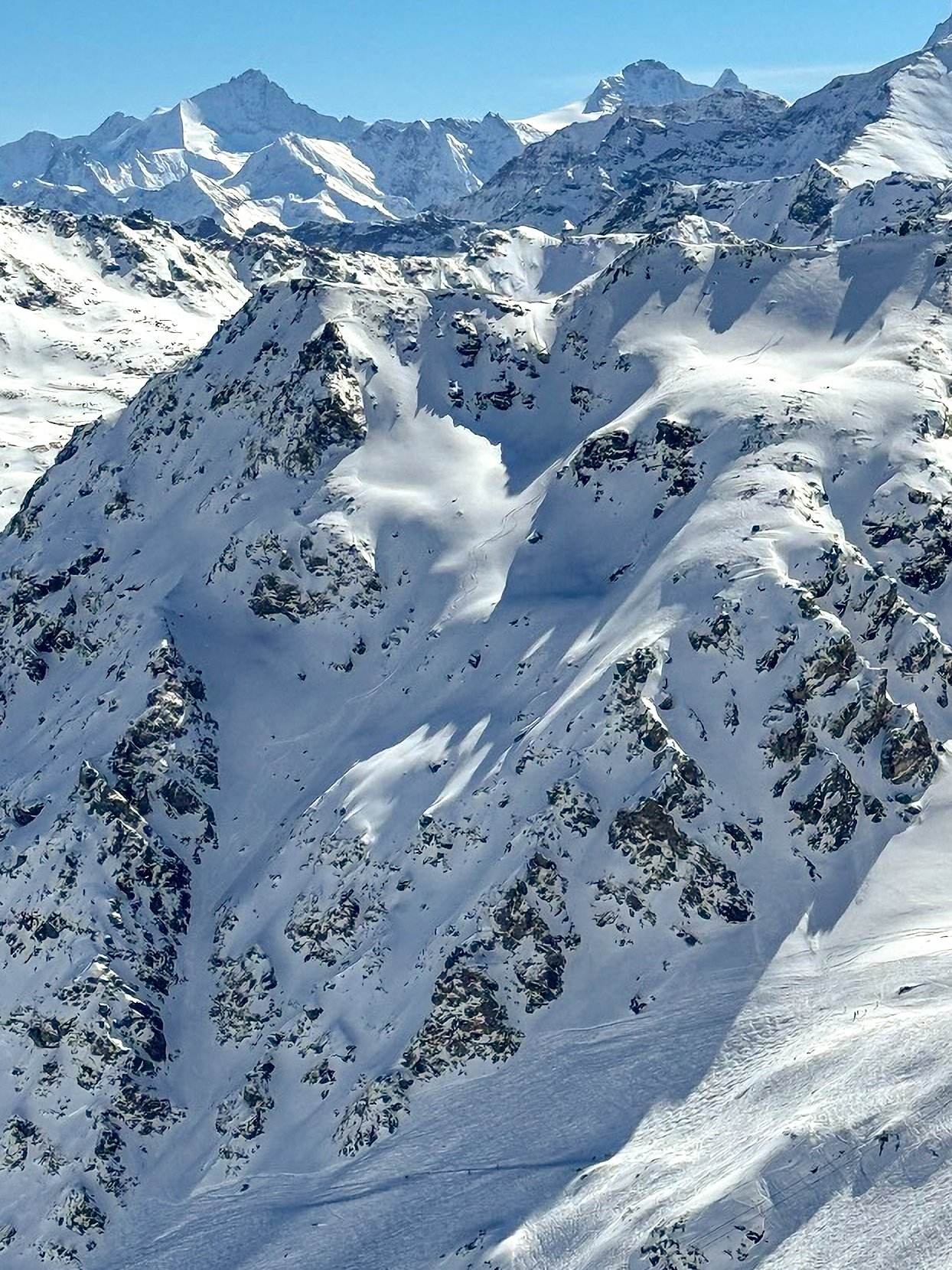
Two tracks in No Name show the diversity and scale of this epic line, far above the piste
Accessed from the Gentianes tram after a 20 minute skin, No Name opens onto wide, undulating terrain before gradually getting steep, then finishing in a tight couloir. Keep an eye on your sluff as you descend. This is one of Verbier’s very best lines for diversity of terrain — that rewards the effort required to reach it. Few know how to get here, and it didn’t have a name until we used our evident linguistic mastery to christen it.
An added bonus is periodic ski patrol bombing in recent years, due to the threat of a slide into the official Gentianes itinerary, implying a tested snowpack which you don’t find on nearly all of the lines mentioned here (but know before you go). If it looks tracked, continue on to Turtle (Arpette) for a good couloir and high speed untracked skiing into Verbier’s widest apron. Or bail entirely and keep going to the Wings of Icarus.
Bec des Étagnes
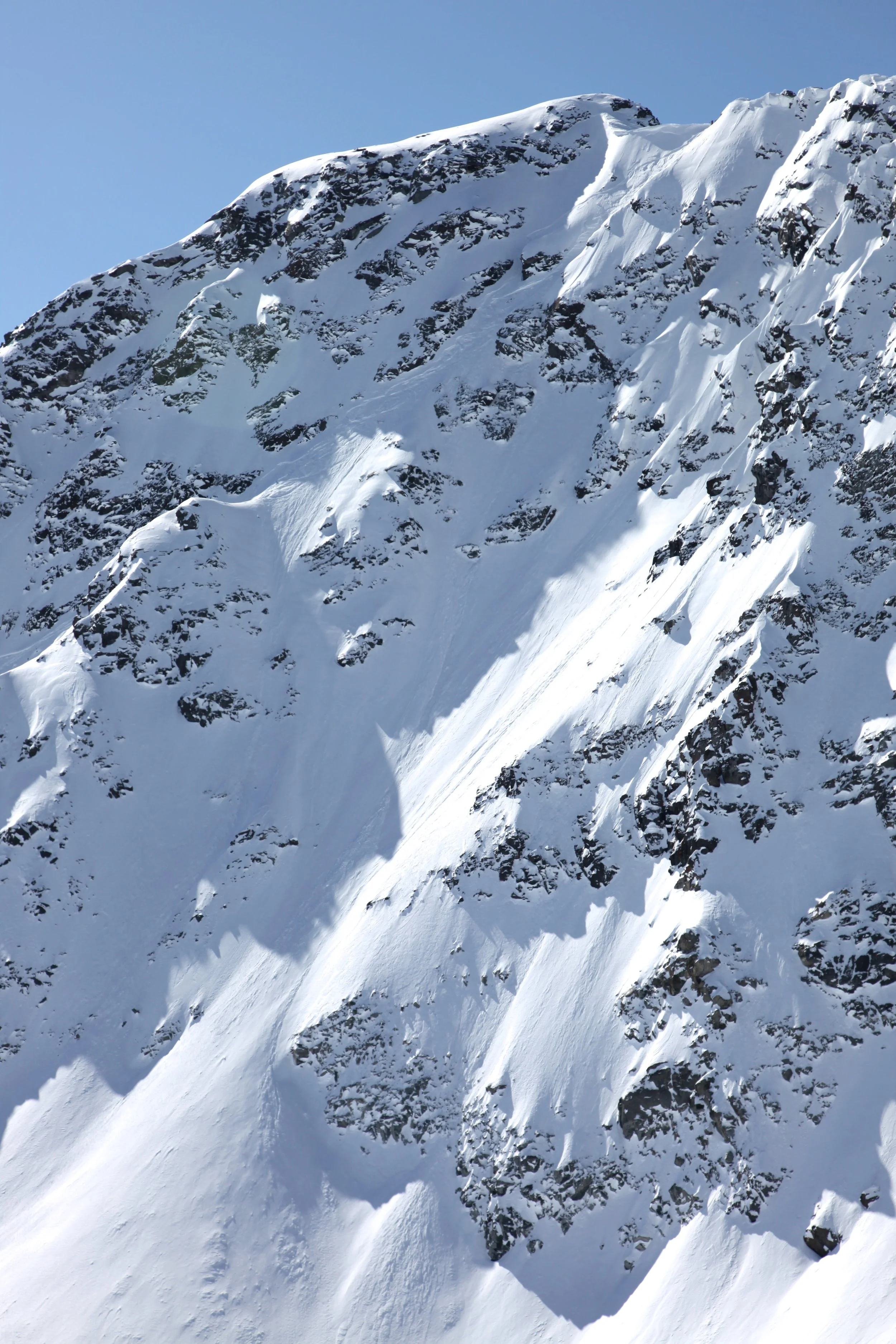
The top part of the Bec des Etagnes - the best line is over the looker’s left shoulder, leading to a massive high speed apron (not visible)
Located in the Mont Fort area, the Bec des Étagnes demands commitment before you even start. A 30 minute bootpack straight up from the über luxe Cabane Tortin is your entry fee, rewarded by one of the most serious lines in Verbier. The top is a no-fall zone — this is expert terrain only, and should be treated as such. Get it on a good snow day however, and what follows is a steep face opening onto a huge apron loaded with pow. When the conditions align, it's as good as it gets. Avoid the skier’s left (north facing) couloir as it’s a little short vs your boot packing investment.
Bonus: skip the long time-wasting slog at the Lac de Cleuson dam way below and instead skin from the bottom of the Bec’s apron up to the top of No Name or Wings of Icarus, allowing another couloir on the way to the tram. Pro tip: if you find yourself at the base of the Bec’s climb with no energy, descend hard skier’s left of the Cabane Tortin for a quite short but often untracked shot into the Mont Fort basin.
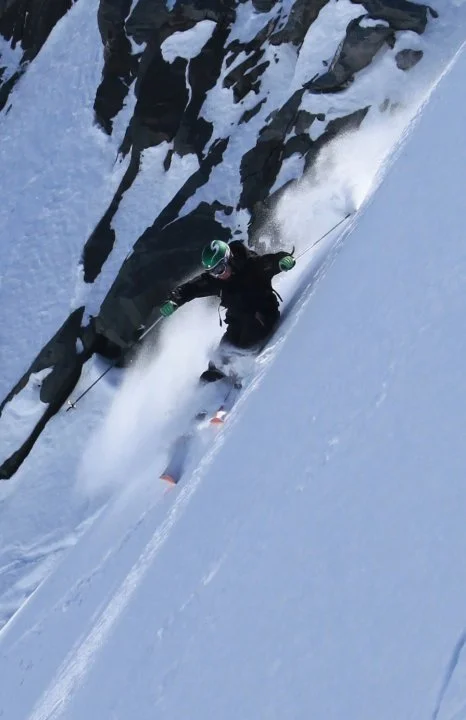
Arcing the first turn at the very top of the Bec des Etagnes
Bec des Rosses
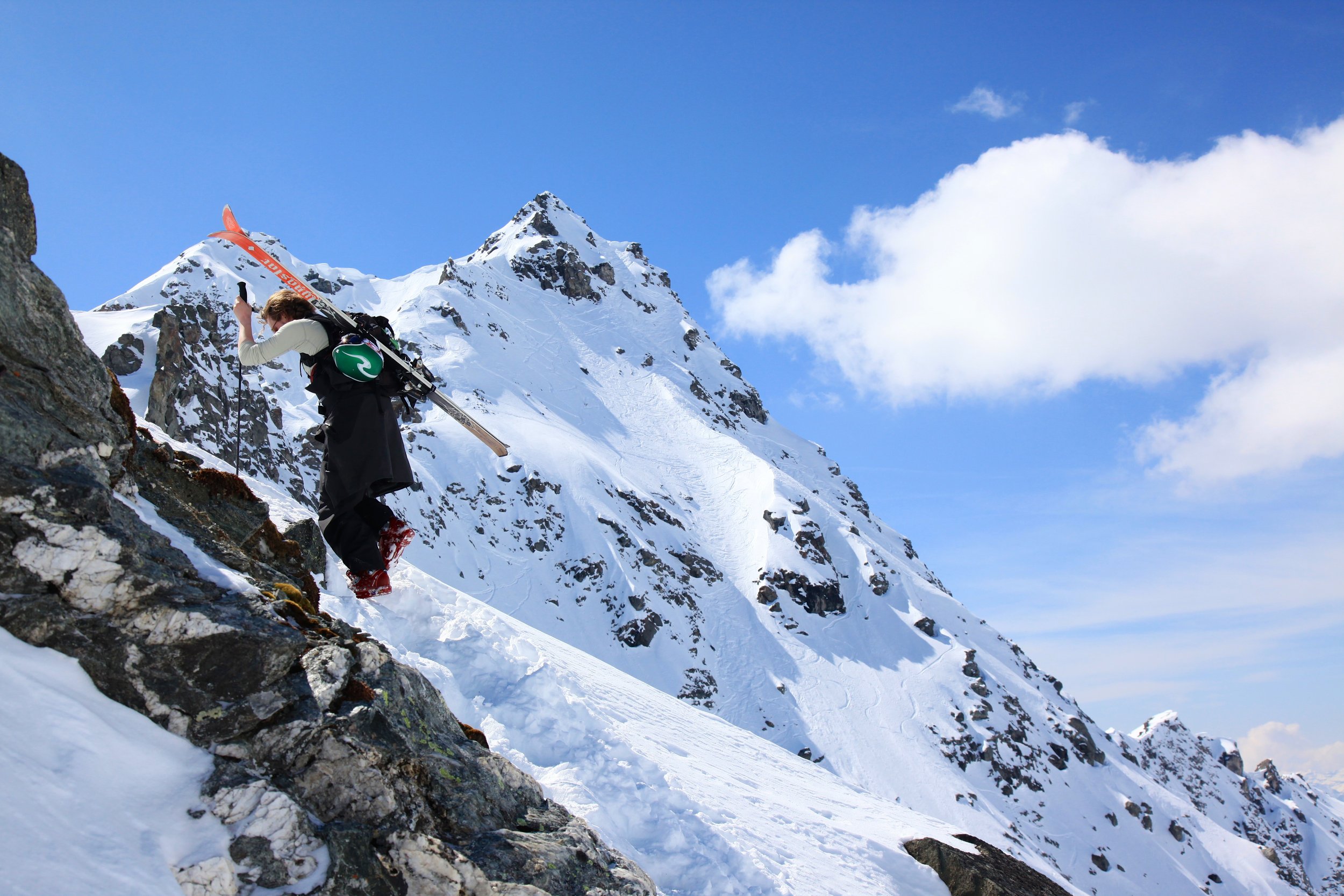
One third of the way up the bootpack to the top of the Bec des Rosses
Arguably Verbier's most famous peak and the annual site of the Freeride World Tour final in March. Multiple lines ranging from the extremely challenging to the simply very steep make the Bec des Rosses a must for anyone drawn to steep skiing. Watch the professionals then make your own call, but be mindful that they’re a) 23 and b) getting it after a period of closure that usually enables great snow.
The Dogleg Couloir is a great “entry level” line on the Bec — skip the last (tough) bit of the Bec’s climb and enter it a third of the way down, to capture its best part — see our videos page to get a sense of what it’s like. Get lucky and ski the rarely doable Chaux Face in one-in-twenty seasons, then go for a beer at the Cabane Mont Fort to celebrate your good fortune.
Mont Fort
The highest point in the 4 Vallées at 3330 metres, Mont Fort is the gateway to some of Verbier's most celebrated terrain — the North Face, Super Bowl, and the Bec des Rosses among them. The two couloirs very hard left (and winding round) from the bottom of the tram’s steel exit staircase are exceptional, and there are also umpteen gentle touring itineraries (like Rosablanche) accessible from here. But on a powder day, fresh snow directly beneath the tram should never be overlooked, especially because it doesn’t entail a long slog out at Lac de Cleuson. Sometimes the best line is the most obvious one.
Wings of Icarus
Some lines have a reputation that precedes them. Accessed just 500 metres from the Catwalk, the Wings of Icarus offers multiple steep couloirs feeding into a huge sustained descent — with serious consequences. The terrain naturally winds left and ends abruptly at Lac de Cleuson, meaning an avalanche here, or anywhere along the exit traverse above the lake, is not merely an inconvenience.
The photo below was taken on a day we turned back. A lean season had left the couloirs bony and unconsolidated, and putting in the first track was too high of a risk. On the right day though, this is very high quality off-piste skiing in Verbier.
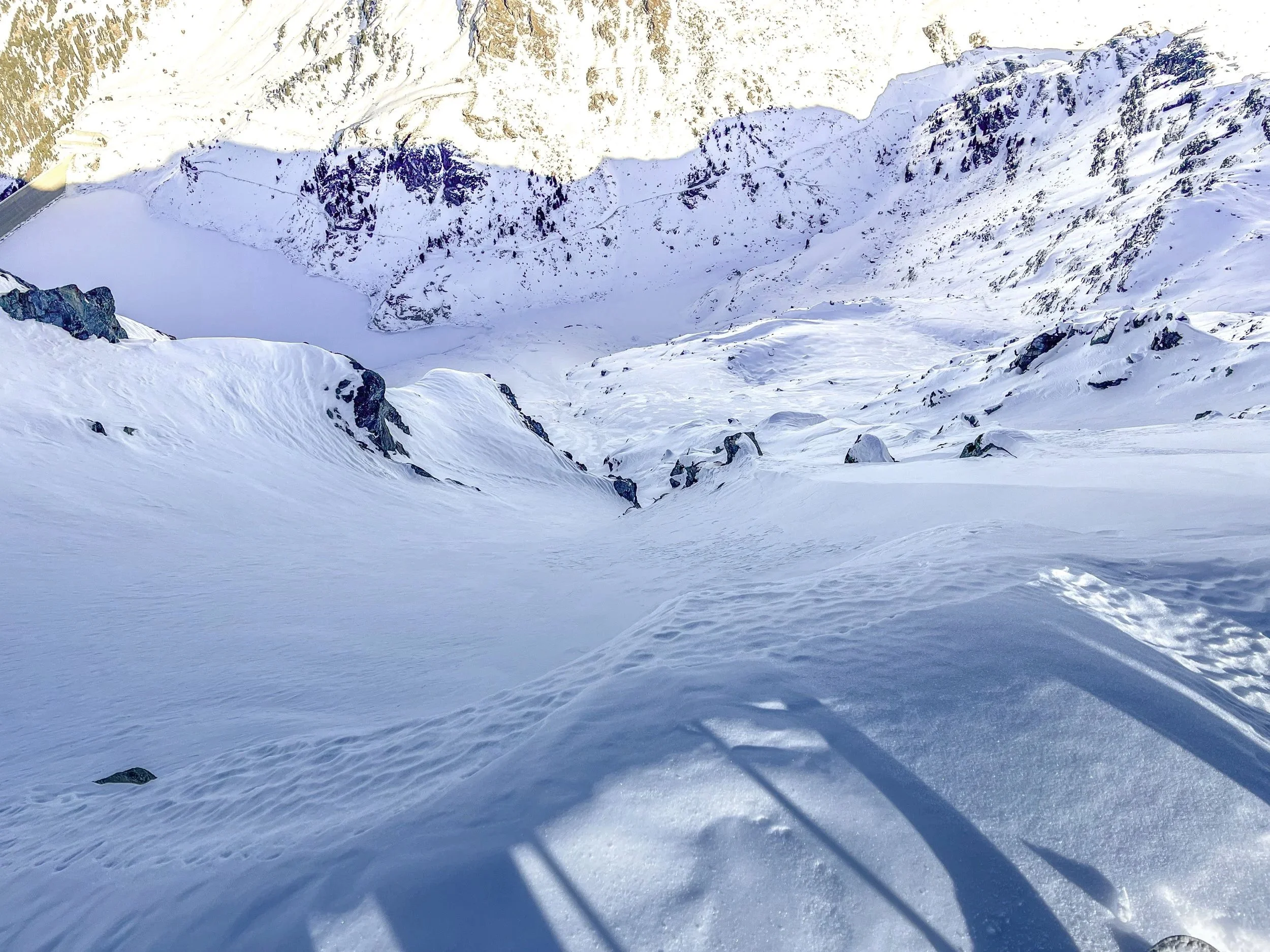
The skier’s left couloir on Wings of Icarus - when it’s unstable, not filled in and too risky to ski
Chicken Run
Never heard of it? That’s not surprising. Verbier has highly unusual nomenclature: almost all of the off-piste has no official names, unless it’s simply a mountain name, like the Bec des Rosses or Bec des Étagnes. Instead the names — Highway, Stairway to Heaven, Wings of Icarus, Pette’s Pony Tail — have been christened by local skiers (usually Finns!) and handed down through generations. This leads to multiple lines that everyone refers to differently.
“Chicken Run” is a line we ski almost every year if the conditions are right (usually April), but nobody else does — there are never tracks in it. We can’t remember why we call it Chicken Run; whatever the reason, it’s a very steep line next to No Name, accessed via Catwalk, that spills onto the Gentianes itinerary. It isn’t long, but it’s exceptionally good when it sets up properly. Make sure you keep an eye on your sluff as it’s tight and therefore very easy to get cleaned out on!
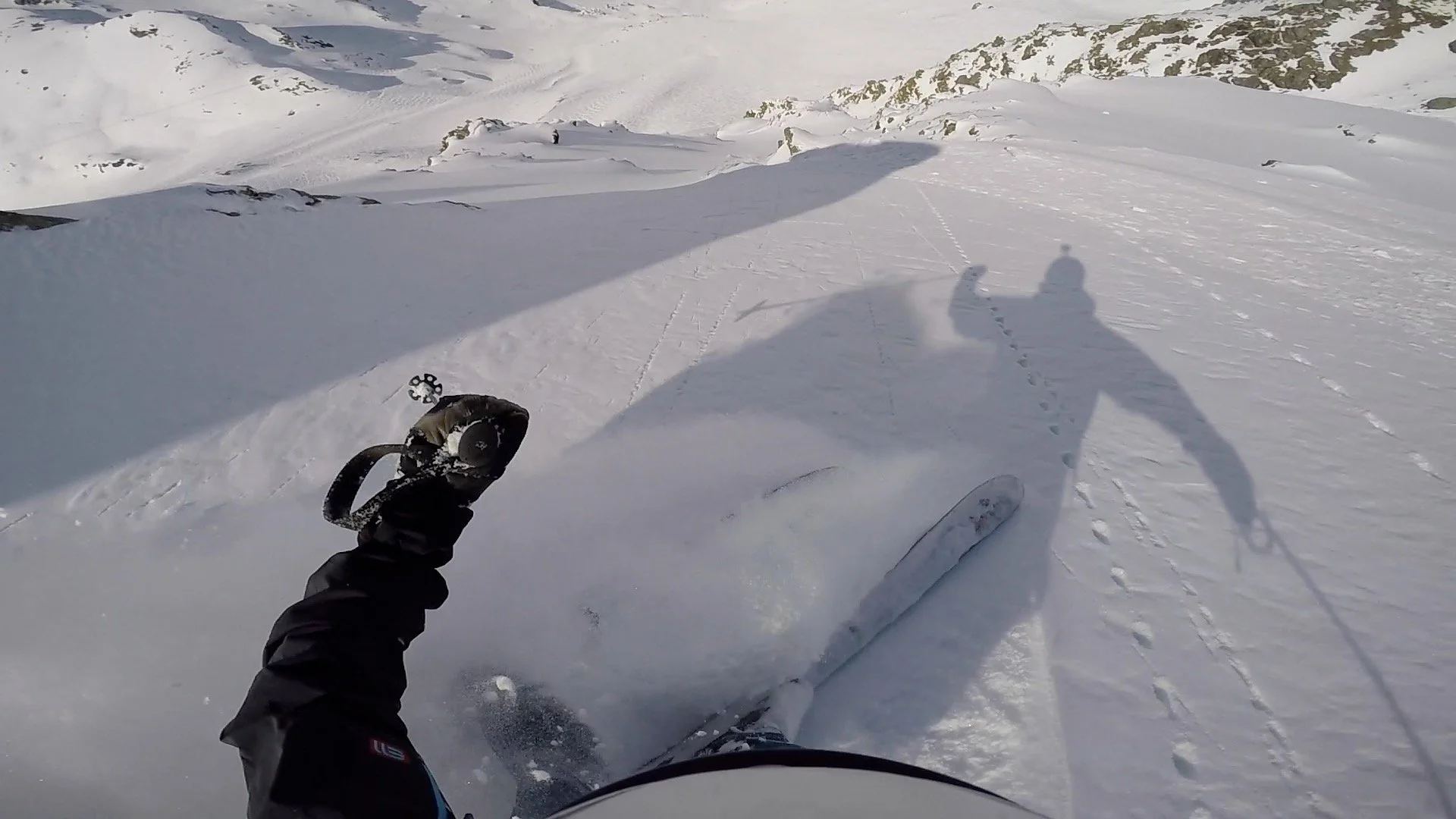
Diving into untracked Chicken Run on a pow day
Pette’s Pony Tail (aka Triple Stairway)
Experienced off-piste skiers in Verbier would be very surprised to see this line make the list. It’s not only a nightmare to get to, it’s also an exercise in will power. To get there, you first ascend the Stairway to Heaven, pass on a fresh powder descent, traverse hard left and climb again, pass on more powder on the Double Stairway, then traverse again before the final climb to the top. It takes hours.
Named after one of Verbier’s very best guides, Pette Halme, once you make your first turn in Pette’s Pony Tail all of that effort is forgotten. It’s got a wide top that chokes halfway down, sometimes requiring a mandatory air before joining a high speed apron that forms the very hard skier’s right of the official Mont Gelé itinerary. You’ll come in on top of the odd guy who wonders how on earth you got there.
A legendary variant en route is to skip the Double Stairway, and instead climb straight up to The Fingers — two classic and rarely tracked couloirs that drop in on the Cabane Mont Fort. The climber’s right couloir is a lot easier to access. Be very careful here, and only ski these lines in cold weather before noon.
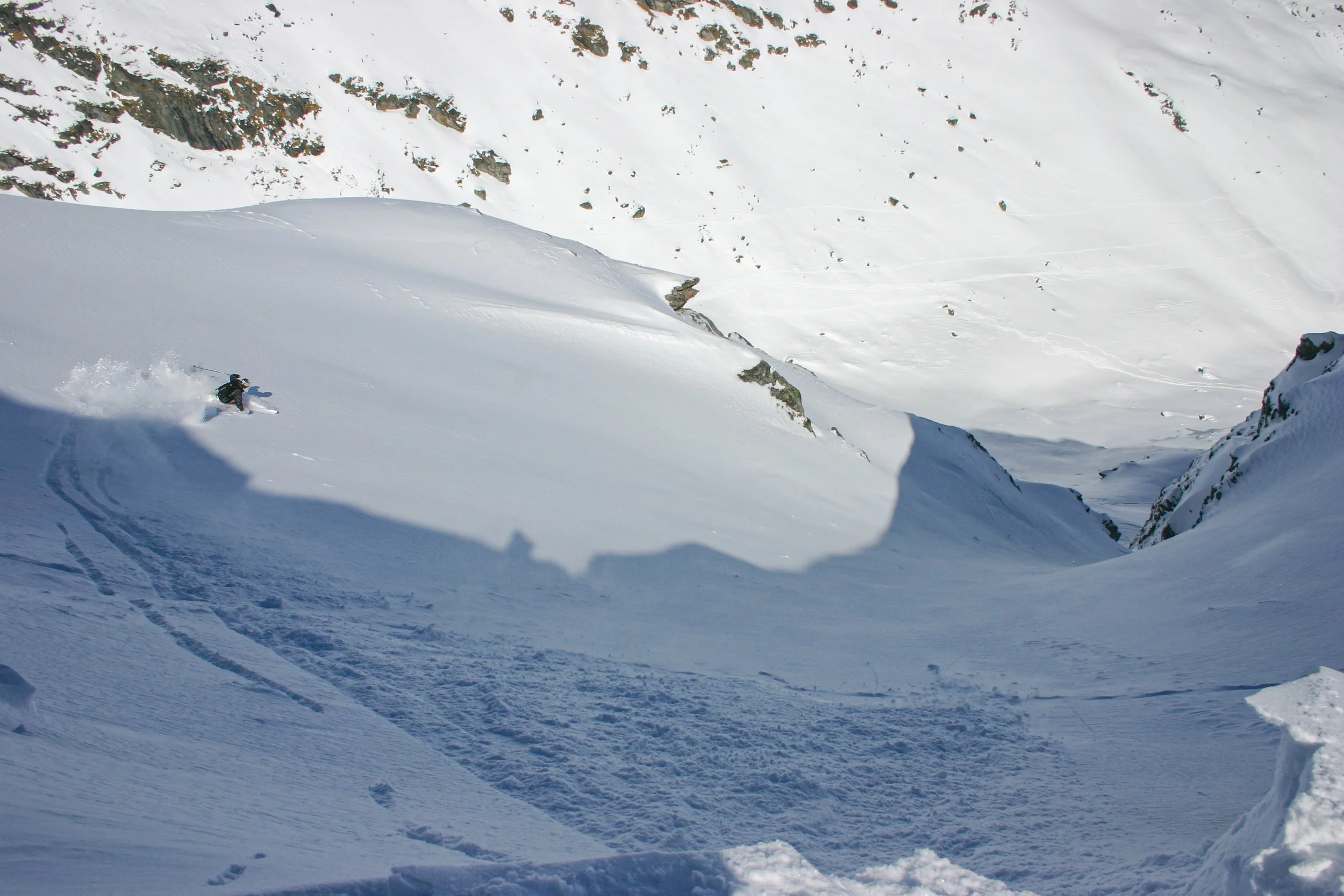
The first turn in Pette’s Pony Tail is a high speed rush
A Massive Day Out
On a sunny weekend pow day over school holidays, Verbier can get very busy, making laps tricky to achieve. If you’ve got the Swiss Topo app on your phone and you’re a good navigator, the ultimate day out can be had.
Start on Mont Fort’s North Face, but traverse very hard left before the apron. Climb the fairly obvious face, revealing a hidden lake on the other side, halfway up the climb to the Bec des Étagnes. Scale the Bec, ski the northeast couloir to the bottom of the apron, then skin to the top of No Name. Descend No Name or Turtle, then traverse hard right to the very edge of the Gentianes Itinerary. Skin again up the obvious route, and bag one of the treed couloirs (the last one is best) that come in just above the base of the Gentianes tram.
You’ll be out all day, ski up to 2500m of untracked powder, and likely not see a soul. Be sure to have a monster breakfast, and bring along someone large who actually enjoys bootpacking steep powder-laden ascents, so you can cheat and follow in their well-set footsteps.
Attelas Couloirs
As the most trafficked and easily found couloirs in Verbier, these are fairly basic and hardly unknown — in fact you can see them from the hot tub at Chalet la Vigne. But like anything, there’s a way to ski them.
Rock & Roll has that cavernous Dolomites couloir feel to it, a rarity in Verbier, but it has a major disadvantage. Unless you’re first, which itself is risky due to the car-sized boulder in the middle of the couloir that’s exposed early to mid-season, you’ll blast through endless traverse lines when you come out of the couloir, thanks to Creblet skiers invariably trying to find better snow. Dirty Shrimp, a little further along the ridge, helps with this but its three horrendous entries mean it’s usually for rock skis only.
The ultimate is the Number One couloir. Get it early for fresh tracks, or en route to the Pub Mont Fort at the end of the day. A little north facing, it’s almost always shaded, making it much safer with better snow than the other couloirs mentioned, or those around the corner under the James Blunt chairlift. Make 3-4 big turns out of the bottom of the couloir then head hard skier’s left for a nice final slope protected by new avalanche barriers installed in 2025/26.
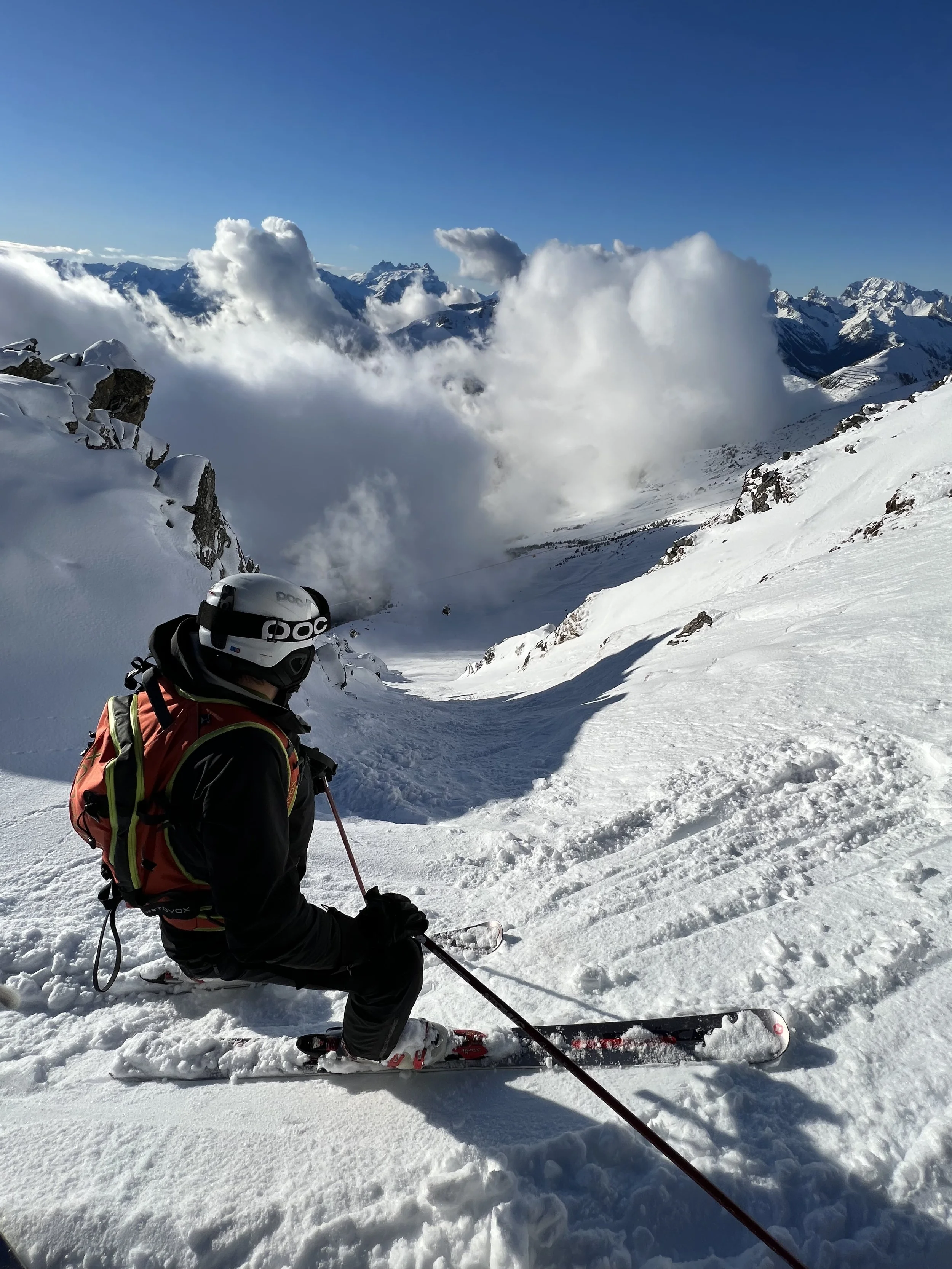
Last run of the day: dropping into the Number One couloir, high above Verbier
Skiing Home
One of the underrated pleasures of staying at Chalet la Vigne is the ski home. Accessed from Savoleyres, both the on-piste and off-piste return routes offer good skiing, great views, and pass either La Marmotte or La Marlenaz — two of the most celebrated on-mountain restaurants in Verbier. Tricky to navigate the first time but easy thereafter, skiing home is a civilised way to end the day.
Further Afield: Mont Rogneux
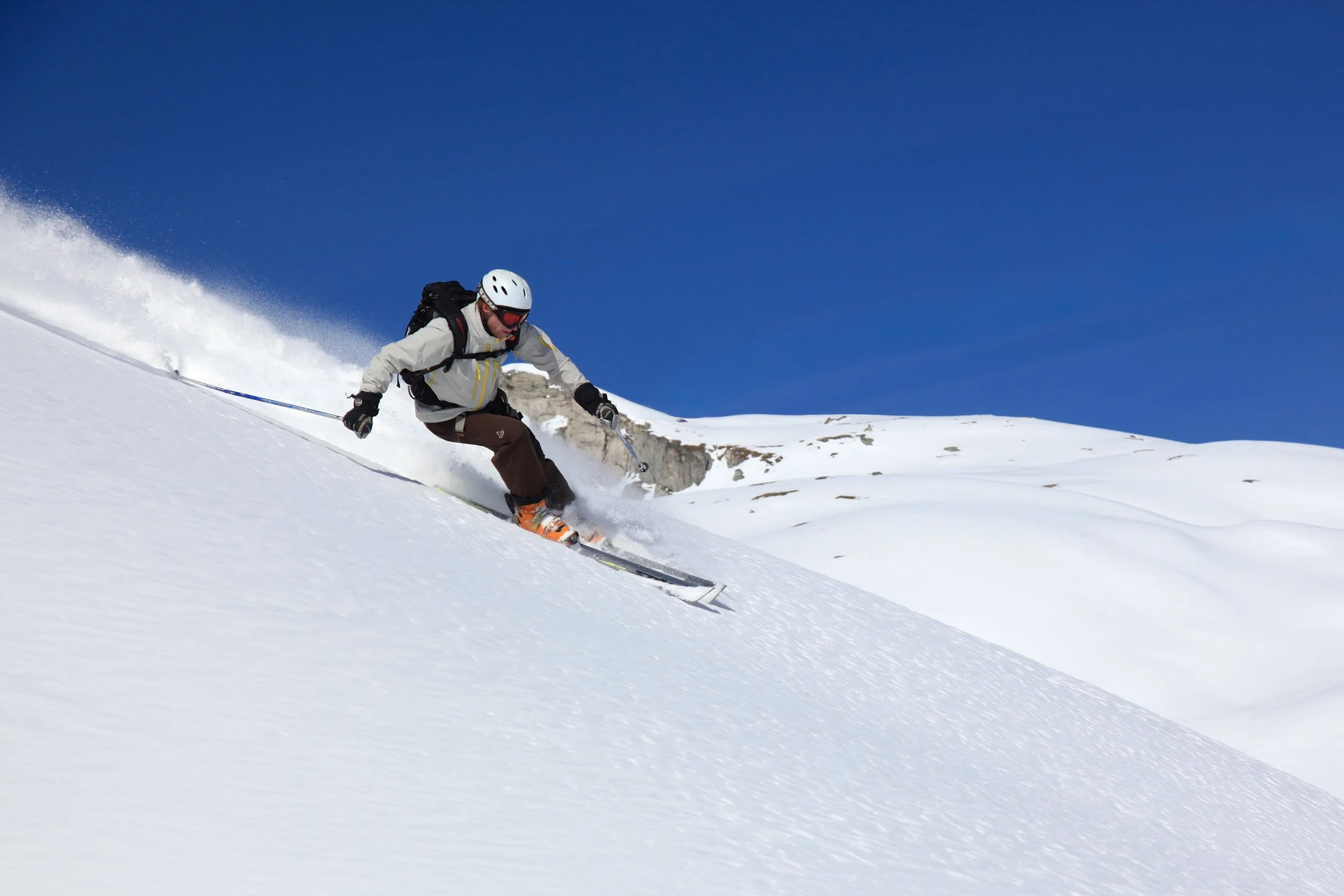
Ripping the apron at the bottom of the Mont Rogneux descent
Visible directly across the valley from Chalet la Vigne, Mont Rogneux is another serious undertaking — typically accessed by helicopter to the top of the Petit Combin, a descent down its North Face, followed by a randonnée to the top of Mt Rogneux. What follows is over 1200 metres of steep couloirs, flowing mid-sections and a massive apron leading to a well-earned drink afterwards. A full-day classic for experienced skiers. A guide is essential.
A Final Word - Safety
All of the lines described here can be very risky on the wrong day. Being prepared — carrying avalanche safety equipment, skiing with a guide when you don't know the terrain, and checking the avalanche bulletin before heading out — minimises the risk but doesn't eliminate it entirely. Even on familiar terrain, complacency is the enemy.
The video below shows a small avalanche triggered on a knoll at the top of No Name couloir — a knoll that wind loads and isn't necessary to ski. The skier had traversed too high, forgotten it was there and ski-cut it without thinking. It's a small slide, but it gives a sense of what it’s like to ski loaded terrain when it fractures.
A small but avoidable avalanche, triggered by complacency
follow us on instagram
Ready to plan a ski trip to Verbier? Contact us and let’s talk skiing
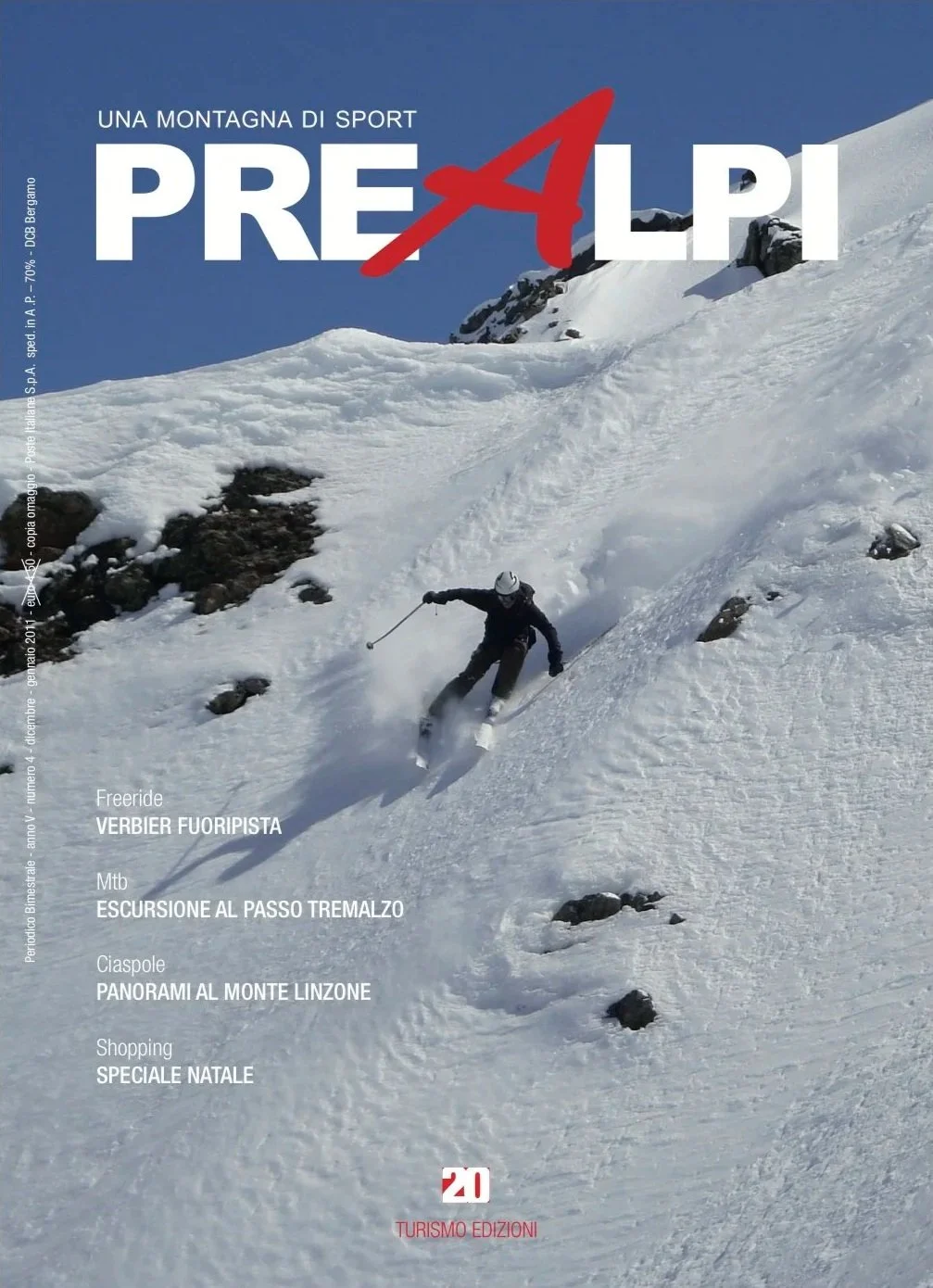
A happy Chalet la Vigne guest gets his first magazine cover shot, on the descent of Mont Rogneux